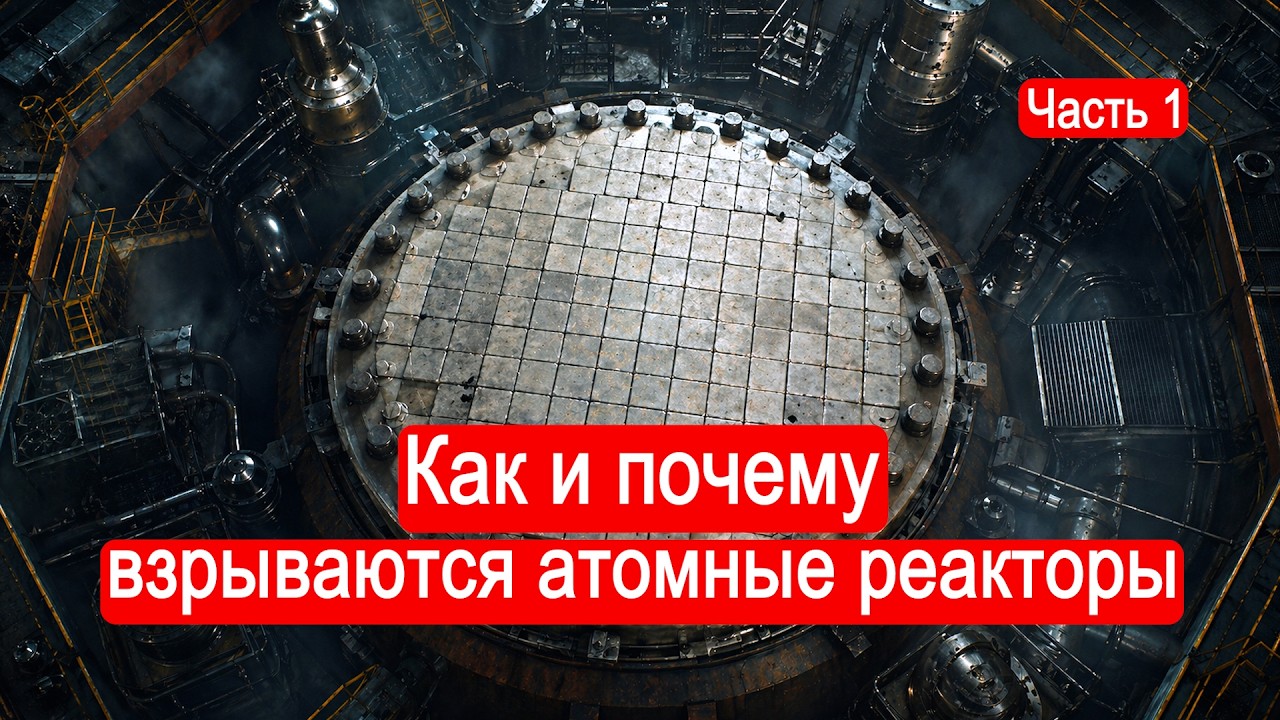
Summary
TL;DR: The video explains why nuclear reactors almost never explode, how chain reactions work, the crucial role of neutron speed and moderators, and contrasts reactors with atomic bombs while also discussing historical accidents and radiophobia.
Verdict: WATCH — the video delivers a dense, technical overview that clarifies common misconceptions about reactor explosions and provides useful context for anyone interested in nuclear physics.
Key Takeaways
- Only two major catastrophic nuclear incidents (Chernobyl and Fukushima) have occurred in roughly 80 years of reactor operation, despite over 400 reactors built.
- Both a nuclear bomb and a reactor rely on the same fission chain reaction; the key difference is the speed of neutron multiplication.
- Neutron speed determines behaviour: fast neutrons lead to rapid, explosive reactions (bombs), while slow (thermal) neutrons allow controlled, sustained fission (reactors).
- The moderator (graphite, heavy water, light water) slows neutrons without capturing them; its choice dictates whether enriched uranium is needed.
- Graphite‑moderated reactors were the first designs but are now being phased out because graphite cannot be removed in an accident, unlike water which evaporates and acts as a built‑in safety shutdown.
- Heavy‑water reactors can run on natural (unenriched) uranium, making them attractive for nations lacking enrichment capabilities, but the production of heavy water is extremely costly.
- Public “radiophobia” after Chernobyl caused a massive reduction in nuclear construction, yet overall electricity demand was met by expanding fossil‑fuel plants, leading to greater environmental harm.
Insights
- Psychological impact outweighs physical danger: The video highlights that stress‑induced deaths from war (e.g., the Iran missile attacks) far exceed casualties directly caused by radiation, underscoring how fear can be more lethal than the technology itself.
- Graphite’s hidden danger: While graphite is an excellent neutron moderator, trace boron impurities can turn it from a moderator into a neutron absorber, sabotaging reactor performance—a problem that derailed the German WWII program.
- “Fast‑reactor bombs” concept: Post‑WWII U.S. experiments attempted to create a “fast‑breeding” reactor that would explode like a bomb; the project failed spectacularly, illustrating the thin line between weapon and power‑plant design.
- Energy‑release comparison: A mere 1 kg of fissile material in a bomb releases energy equivalent to 16 million kg of TNT, showing the immense power density of nuclear fission compared with conventional explosives.
Key Topics
- Historical accident statistics (Chernobyl, Fukushima)
- Physics of fission chain reactions
- Neutron energy categories (fast, thermal, ultra‑fast)
- Reactor moderators and their properties (graphite, heavy water, light water)
- Differences between nuclear weapons and power reactors
- Societal effects of radiophobia and energy policy
Key Moments
0:00 – Greeting and introduction; the video will tackle reactor explosions from a technical “technicum” perspective.
0:25 – Overview of accident history: only one catastrophic event (Chernobyl) in the first 40 years, a second (Fukushima) after another 40 years.
6:45 – Comparison of atomic bomb vs. reactor: “Атомный реактор и атомная бомба. Что общего? В чём разница?” (Atomic reactor and atomic bomb. What’s common? What’s different?)
12:50 – Energy release analogy: 1 kg of fissile material in a bomb equals 16 million kg of TNT.
18:10 – Importance of the moderator: how slowing neutrons enables a controlled chain reaction.
24:30 – Historical note on the first graphite‑moderated reactor (Enrico Fermi’s Chicago Pile‑1) and its legacy.
30:00 – Pros and cons of heavy‑water reactors, including their suitability for nations without enrichment infrastructure.
32:00 – Closing remarks and preview of the next video covering five real reactor accidents.
Notable Quotes
"Атомный реактор и атомная бомба. Что общего? В чём разница?" (Atomic reactor and atomic bomb. What’s common? What’s different?)
Best For
Students, enthusiasts, or professionals seeking a concise yet technically solid explanation of why nuclear reactors don’t explode and how reactor design choices affect safety and fuel requirements.
Action Items
- Review the basic concepts of neutron moderation and consider how different moderator materials influence reactor design.
- Explore reputable sources (e.g., IAEA, academic textbooks) to deepen understanding of the five major reactor accidents mentioned for the upcoming video.
- Reflect on the impact of radiophobia and evaluate energy policy decisions in your region with a balanced view of nuclear versus fossil‑fuel risks.
Community Discussion
What Viewers Think
Overall Sentiment: Positive · Consensus: Viewers overwhelmingly appreciated the depth and clarity of the analysis, while a few noted they would like even more context or visual aids.
What People Liked
Common Complaints
Interesting Takes
Verdict
The community responded enthusiastically, praising the video’s thoroughness, clarity, and the creator’s dedication. A small number of viewers suggested that additional contextual links—such as clearer connections to the HBO series—could enhance understanding. Overall, the reception was positive, with viewers expressing gratitude and eagerness for future deep‑dive content.