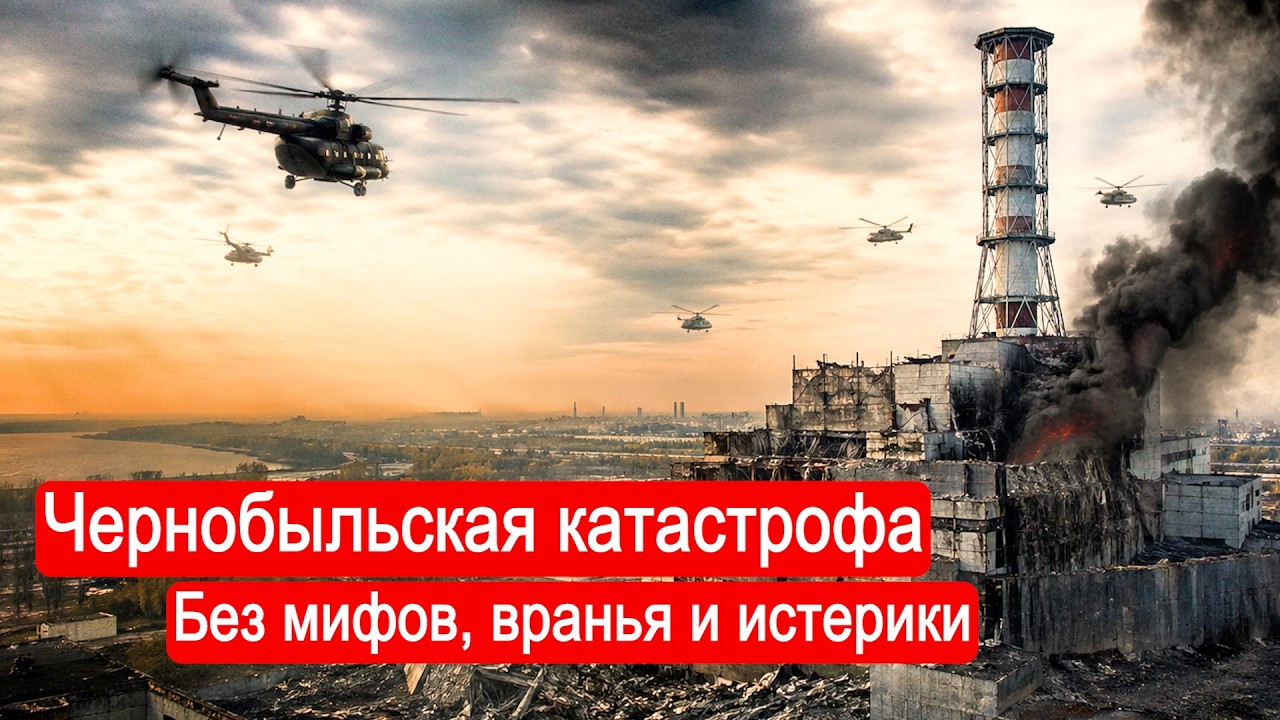
Summary
TL;DR: The video provides a detailed technical breakdown of the Chernobyl disaster, examines its immediate and long‑term health, economic, and political consequences, and critiques common myths and radiation‑risk models.
Verdict: WATCH — the analysis is dense, well‑structured, and offers valuable insight for anyone seeking a deeper, myth‑free understanding of Chernobyl.
Key Takeaways
- The explosion resulted from a cascade of improbable events during a poorly planned safety test, compounded by the RBMK reactor’s design flaws.
- The reactor could not be operated at reduced power; the “xenon poisoning” made it unstable and led to an uncontrollable power surge.
- A massive steam‑hydrogen explosion blew the reactor’s massive 2 500‑tonne steel containment lid, followed by a graphite fire that lasted days.
- Radiation released was roughly nine times higher than at Fukushima and about 70 times the Chernobyl‑type release at the Chelyabinsk “Mayak” accident.
- Official health data show only ~30 immediate deaths and about 6 000 cases of thyroid cancer in children, of which 15 were fatal—far lower than many alarmist estimates.
- The speaker argues that the linear no‑threshold (LNT) model used for radiation risk vastly overstates health impacts; much of the perceived “catastrophe” stems from panic and misinformation.
- Comparisons of mortality per unit of electricity show nuclear power’s direct death toll is dramatically lower than that of coal, gas, or even wind farms.
Insights
- Design‑Induced Vulnerability: The RBMK’s inability to lower power safely made any deviation during the test a recipe for disaster.
- Radiation vs. Panic: The majority of long‑term societal damage was psychological (radiophobia) rather than radiological.
- Energy Policy Consequence: Chernobyl halted nuclear expansion for decades, inadvertently increasing reliance on more polluting energy sources.
- Statistical Skepticism: The speaker highlights how the LNT model can turn negligible risk into apparently massive mortality figures, urging caution in interpreting such data.
Key Topics
- Technical chain of events leading to the Chernobyl explosion
- Reactor design flaws of the RBMK model
- Radiation release magnitude and comparison to other incidents
- Health impact assessments and the critique of the LNT model
- Socio‑political fallout and its effect on nuclear energy policy
Key Moments
0:00 - Introduction and framing of Chernobyl as a catastrophe beyond a mere technical accident.
2:15 - Explanation of how simultaneous unlikely events define a classic industrial accident.
5:10 - Description of the rapid power surge (“avalanche”) and the failure to insert control rods in time.
9:05 - Comparison of Chernobyl’s radioactive release to Fukushima and the Mayak accident.
14:35 - Presentation of objective health data: 30 immediate deaths, ~6 000 thyroid cancers, 15 fatalities.
16:25 - Critique of the linear no‑threshold radiation model and its misuse in risk assessment.
27:55 - Concluding remarks urging viewers to guard against radiophobia and consider the broader energy context.
Notable Quotes
"Чернобыльская катастрофа превратилась в глобальную катастрофу не в результате её прямых последствий, а в результате панической реакции" (Chernobyl became a global catastrophe not because of its direct effects, but due to a panic‑driven reaction.)
Best For
Students, researchers, and policy‑makers interested in a technical, data‑driven perspective on Chernobyl and its wider implications.
Action Items
- Review the technical description of the RBMK safety test to understand how design choices affect accident risk.
- Compare radiation‑risk models (LNT vs. threshold) before drawing conclusions about health impacts.
- Consider the presented energy‑mortality statistics when evaluating future energy policy decisions.
Community Discussion
What Viewers Think
Overall Sentiment: Mixed · Consensus: Viewers largely question the credibility of the featured expert and the reliability of the presented statistics, while a handful express curiosity for future episodes and appreciate the host’s deeper knowledge.
What People Liked
Common Complaints
Interesting Takes
Verdict
The community’s reception was mixed: many viewers expressed concern over the expert’s credibility and the handling of radiation‑related statistics, suggesting room for clearer sourcing and stronger factual support. At the same time, viewers appreciated the host’s deeper knowledge and are eager to see a continuation that addresses these gaps. Overall, the discussion sparked thoughtful debate while indicating opportunities for improvement in future presentations.