Summary
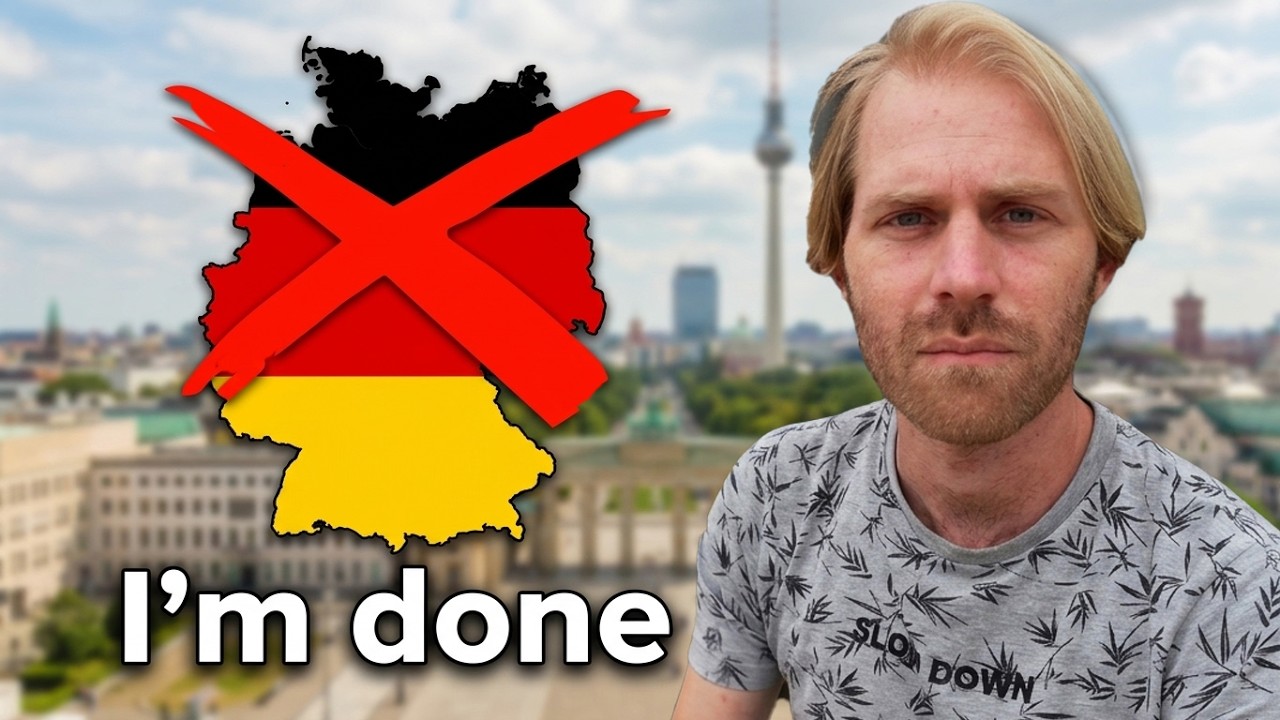
TL;DR: The creator, after decades in Germany, explains why he’s leaving—citing economic stagnation, soaring taxes, poor public services, and a deteriorating societal climate—and contrasts Germany with Japan as a preferable alternative.
Verdict: SKIM — the video is a lengthy, opinion‑driven rant that’s valuable for viewers weighing a move to Germany, but much of it repeats familiar complaints.
Key Takeaways
- Germany’s economy is in recession, with high electricity costs caused by the abrupt phase‑out of nuclear power and costly renewable subsidies.
- Tax and social‑insurance burdens can leave high earners with only ~30% of their income after deductions, while middle‑class salaries are heavily eroded.
- Self‑employed entrepreneurs face double‑taxation, mandatory pension contributions, and a hostile regulatory environment that drives many to leave.
- The welfare system is generous but, in the creator’s view, encourages “lazy” behavior and makes low‑wage jobs unattractive.
- Public safety concerns, especially for women and children, and a lack of family‑friendly infrastructure (e.g., diaper stations) make daily life uncomfortable.
- Political stagnation—dominated by CDU/SPD and the marginalisation of the AfD—has eroded democratic discourse and fueled voter frustration.
- Infrastructure decay (unreliable trains, collapsing bridges) and high housing costs further diminish quality of life.
- Japan is presented as a contrasting model with reliable services, safe streets, and a culture that respects personal property.
Insights
- Energy Policy Paradox: Germany’s aggressive renewable push, combined with the nuclear shutdown, created a decade‑long energy price surge that the creator calls “the most stupid thing” he’s seen.
- Welfare vs. Work Incentive: The claim that minimum‑wage earners earn less than those on social welfare highlights a perceived inversion of work incentives.
- Political Isolation of AfD: The video argues that mainstream parties’ refusal to engage with the AfD undermines democratic pluralism, a nuance often omitted in mainstream coverage.
- Cultural Contrast: Detailed comparisons of child‑friendly facilities in Japan versus Germany underscore how cultural attitudes toward families can shape perceived livability.
Key Topics
- Economic slowdown & energy costs
- Taxation & social insurance burden
- Entrepreneurial climate & regulatory challenges
- Welfare system dynamics
- Public safety & family‑friendliness
- Political landscape & democratic health
- Infrastructure & housing affordability
- Comparative livability: Germany vs. Japan
Key Moments
0:00 - Announces he’s leaving Germany permanently.
2:15 - Criticizes Germany’s exorbitant electricity prices and renewable energy rollout.
5:10 - Explains the heavy tax and pension obligations for self‑employed workers.
10:00 - Describes how the welfare system rewards “lazy” behavior over work.
15:30 - Highlights everyday safety concerns and increasing crime in public spaces.
20:00 - Discusses political stagnation and the marginalisation of the AfD.
26:00 - Compares German shortcomings with Japan’s efficient, safe, and family‑friendly environment.
Notable Quotes
"Watching politics in Germany is like watching a prequel to the movie Idiocracy." (Watching politics in Germany is like watching a prequel to the movie Idiocracy.)
Best For
Anyone considering moving to, working in, or starting a business in Germany—and those curious about comparative quality‑of‑life analyses.
Action Items
- Research current German tax, social‑insurance, and energy costs before relocating.
- Evaluate alternative countries (e.g., Japan, Southern Europe) for family‑friendly infrastructure.
- Connect with expatriate or entrepreneur communities to gauge real‑world experiences.
- Monitor German political developments, especially regarding the AfD and election cycles.