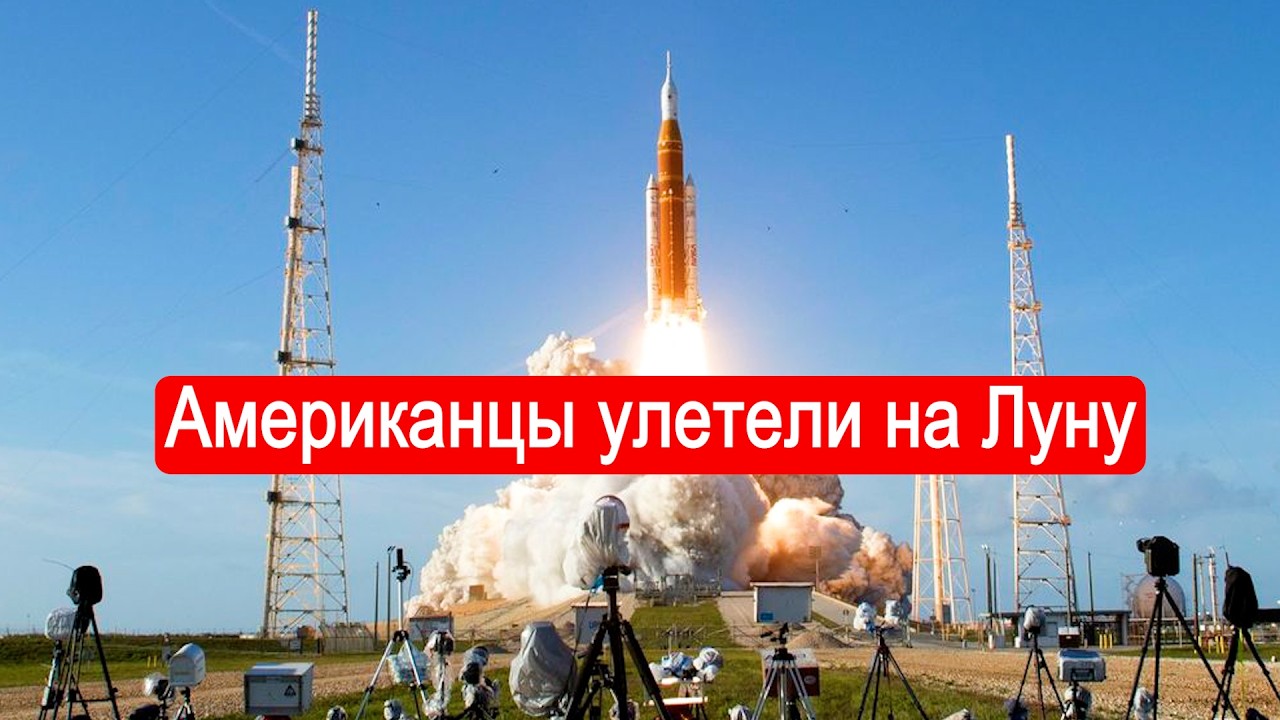
📝 Summary
TL;DR: The video critiques the recent April 1 lunar flight, argues that Earth’s untapped lands deserve priority, and provides a deep technical comparison between the historic Saturn V and today’s NASA SLS rockets.
Verdict: WATCH – the content offers a rich historical overview and detailed engineering analysis that will interest anyone curious about rocket technology and space policy.
🔑 Key Takeaways
- The presenter questions the purpose of lunar missions, urging humanity to focus on developing Earth’s vast uninhabited regions (Australia, Sahara, Siberia, etc.).
- He revisits the 1968 free‑flyby of the Moon, highlighting how the Saturn V enabled that mission and set a benchmark for heavy‑lift rockets.
- A side‑by‑side comparison shows Saturn V’s payload to low‑Earth orbit (≈140 t) exceeds the SLS’s ≈95 t, despite SLS being a modern design.
- Engine architecture differs: Saturn V relied on five F‑1 RP‑1/LOX engines; SLS uses four RS‑25 hydrogen/oxygen engines plus two solid‑rocket boosters for lift‑off thrust.
- Specific impulse (Isp) is explained in depth; hydrogen/oxygen (≈450 s) outperforms RP‑1/LOX (≈300 s), but handling cryogenic hydrogen is technically demanding.
- The video details turbopump and gas‑generator cycles, showing why modern rockets often blend solid boosters with liquid upper stages.
- Soviet/Russian contributions (RL‑10, RD‑120, KVT‑25) are examined, emphasizing how legacy hardware still informs current designs.
- Blue Origin’s BE‑3 engine is presented as an example of sacrificing some Isp for higher thrust by venting excess hydrogen.
💡 Insights
1. Payload efficiency vs. thrust: Adding powerful solid boosters raises lift‑off thrust but reduces overall mass‑to‑orbit efficiency because solid propellant has lower specific impulse.
2. Engine heritage: Many SLS components trace directly to the retired Space Shuttle Main Engines, illustrating how aerospace programs recycle proven technology.
3. Cryogenic challenges: The extreme cold of liquid hydrogen (‑253 °C) forces unique insulation and turbopump designs, making it the most difficult propellant despite its performance benefits.
4. Design trade‑offs: Venting unused hydrogen after turbopump work can dramatically increase thrust for short burns, a strategy used in modern upper‑stage engines like BE‑3.
📋 Key Topics
- Purpose and policy of lunar exploration
- Historical Apollo/Saturn V achievements
- Technical comparison: Saturn V vs. SLS
- Rocket engine cycles (gas‑generator vs. expander/closed cycle)
- Cryogenic propellant handling and specific impulse
- Legacy Soviet/Russian rocket technology
⏱️ Key Moments
- 0:45 – Introduction and skeptical view of the April 1 lunar mission.
- 2:30 – Call to prioritize Earth’s underpopulated territories over lunar prestige.
- 5:10 – Recap of the 1968 free lunar flyby and Saturn V’s role.
- 9:20 – Detailed side‑by‑side specs of Saturn V and NASA SLS.
- 14:05 – Deep dive into specific impulse and propellant chemistry.
- 19:40 – Explanation of turbopump and gas‑generator cycles.
- 25:15 – Overview of Soviet engine heritage and Blue Origin’s BE‑3 approach.
💬 Notable Quotes
“Наша цель должна быть освоение Земли, а не полёты к Луне ради статуса.”
👥 Best For
Engineers, aerospace students, and space‑policy enthusiasts who want both a technical and philosophical look at modern heavy‑lift rockets.
🎯 Action Items
- Review the specific impulse tables for common propellant pairs and consider how they affect mission design.
- Explore open‑source rocket‑engine cycle simulations to see the trade‑offs between gas‑generator and expander cycles.
- Follow up with the next video in the series to learn about the upper‑stage architecture of the current lunar mission.