Summary
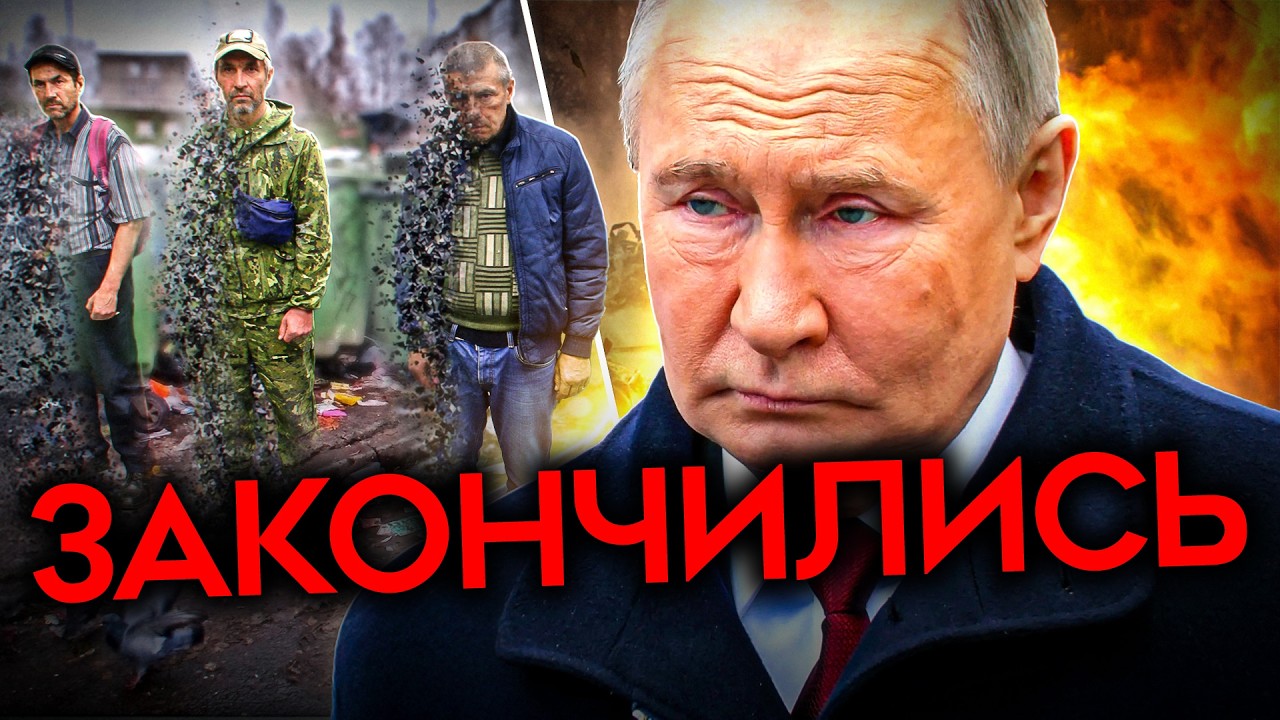
TL;DR: The Russian army’s recruitment has sharply declined, forcing the use of tank crews as infantry and revealing systemic issues in contract enlistment, as shown through detailed budget‑based data analysis.
Verdict: WATCH – the video offers a data‑rich, well‑structured examination of Russia’s manpower crisis and its tactical consequences.
Key Takeaways
- Recruitment drop: Contract enlistments fell to ~80 000 by late March 2026, about 80 % of the 2025 level, according to both official statements and independent budget analysis.
- Kluge’s methodology: Uses publicly available federal and regional budget payouts (≈ 1 M RUB per contract) to estimate the number of contract soldiers, allowing earlier and finer‑grained insights than federal reports.
- Bonus volatility: Regional bonus payments rose to an average of 1.47 M RUB, temporarily boosting enlistment rates, but the effect quickly vanished, highlighting the unreliability of monetary incentives.
- Forced enlistment: Administrative pressure on civilians (e.g., police‑issued “contract‑signing” notices, enterprises forced to supply candidates) is widespread, undermining the notion of a voluntary contract army.
- Tank crews as infantry: Severe personnel shortages mean tank battalions are being stripped of crews and deployed as foot soldiers, a stark indicator of the army’s “minus” status.
- Ukraine’s attrition strategy: Unlike Russia’s “shock‑and‑storm” doctrine, Ukraine deliberately targets Russian manpower and logistics, causing the recruitment deficit to become a strategic liability.
- Student recruitment “drone scam”: Promises of special UAV‑unit contracts for students are largely false; most end up in regular infantry roles.
- Future outlook: Even with planned “strategic reserves” of 20 000, the Russian force in Ukraine is projected to shrink to ~640 000 by year‑end, while Ukrainian capabilities continue to grow.
Insights
- Regional budget data can predict recruitment trends weeks before federal numbers are released, offering a valuable open‑source intelligence tool.
- Higher bonuses do not solve the manpower problem; they only create short‑term spikes while masking deeper morale and demographic issues.
- Administrative coercion (e.g., “contract signing” for detained individuals) is becoming a normalized recruitment channel, blurring legal boundaries.
- The loss of tank crews to infantry illustrates a paradox: advanced hardware is under‑utilized because the human component has collapsed.
Key Topics
- Decline in Russian contract enlistment
- Open‑source budget analysis methodology
- Government‑driven coercion and forced contracts
- Impact on armored units and infantry shortages
- Ukraine’s war‑of‑attrition strategy
- Misleading student recruitment into UAV units
Key Moments
0:02 – Introduction to the recruitment crisis and its strategic implications.
4:00 – Defense Minister Belousov’s claim that recruitment “exceeds the plan,” contrasted with Kluge’s data.
6:25 – Creation of a control group of 16 regions with stable bonuses to filter out data “noise.”
12:01 – Projection of Russian troop numbers in Ukraine, showing a decline from 710 000 to 680 000.
20:31 – Example of aggressive recruitment on a Siberian fishing lake, illustrating grassroots pressure.
27:00 – Explanation that mechanised assaults now involve only a handful of tanks, forcing tank crews into foot combat.
28:46 – Assessment of the combined effect of recruitment drop and rising casualties on Russia’s war trajectory.
Notable Quotes
"Танкистов отправляют пешком под украинские дроны" (Tank crews are being sent on foot under Ukrainian drones)
Best For
Military analysts, policy researchers, and viewers interested in open‑source intelligence on the Russian war effort.
Action Items
- Review the budget‑based recruitment estimation method for your own OSINT projects.
- Share the video with colleagues studying Russian military logistics.
- Follow the channel for updates on upcoming analyses of Russian force deployments.